


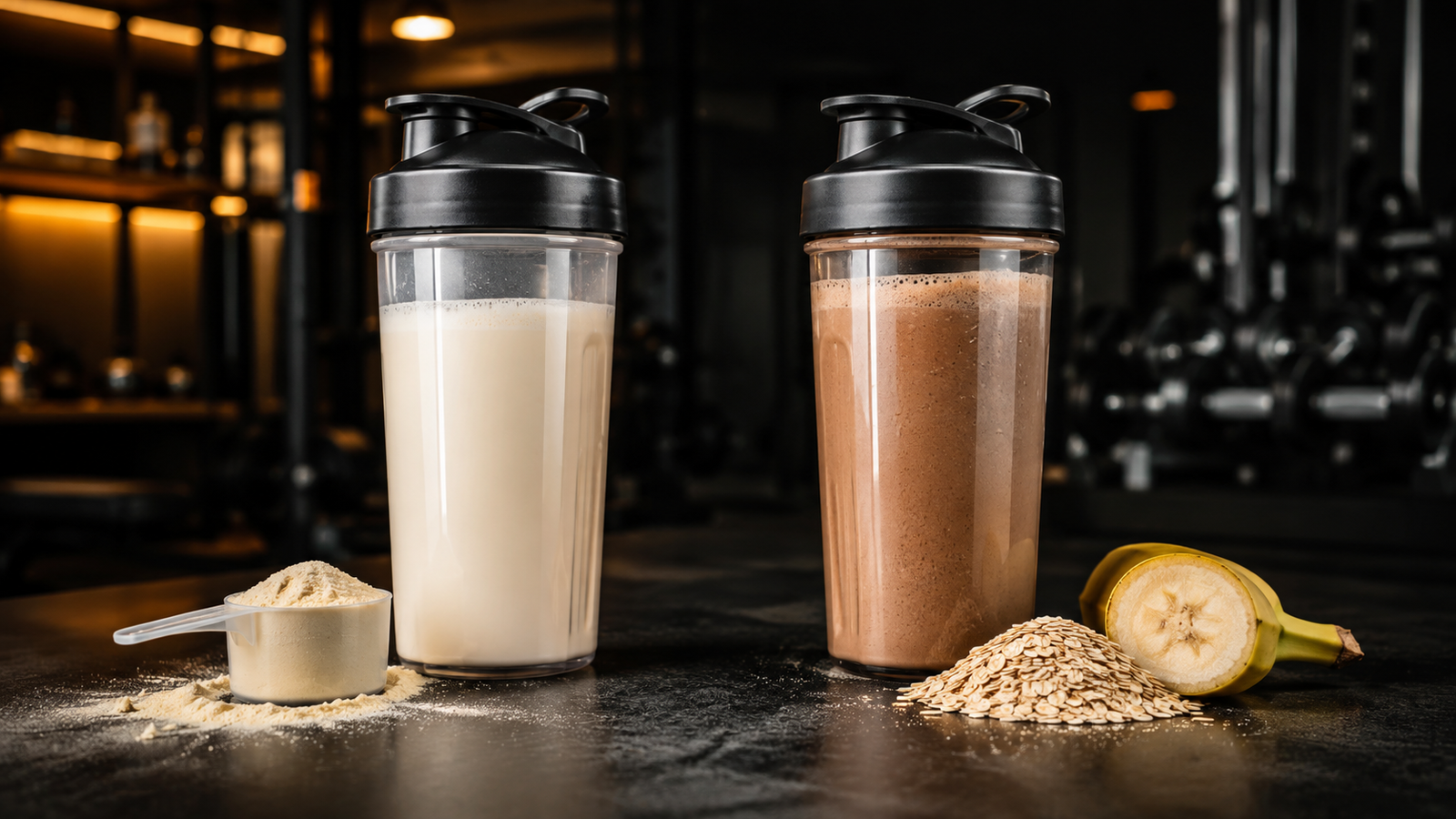
Understanding the whey protein vs mass gainer difference becomes much easier when you start with one question: Do you mainly need more protein, or do you struggle to consume enough total calories?
Whey protein is usually the better fit when you want a convenient source of high-quality protein without adding a large number of calories. A mass gainer is designed for people who need both protein and a substantial amount of extra energy, usually from carbohydrates, to support weight gain.
Neither option builds muscle on its own. Resistance training, sufficient daily food intake, recovery and consistency remain the foundation. The supplement should simply help fill a genuine gap in your diet.
Whey Protein vs Mass Gainer at a Glance
| Whey protein | Mass gainer | |
|---|---|---|
| Main purpose | Increase daily protein intake | Increase daily calories and protein |
| Typical calorie level | Lower | Significantly higher |
| Carbohydrate content | Usually low to moderate | Usually high |
| Best suited to | Lean-muscle goals, recovery and convenient protein intake | Hard gainers and people struggling to eat enough calories |
| Serving flexibility | Easy to add between meals or around training | Best adjusted carefully to match the individual calorie gap |
| Does it replace a balanced diet? | No | No |
What Is Whey Protein?
Whey is a milk-derived protein that provides all nine essential amino acids. It is popular among athletes because it is convenient, mixes easily and can help them reach their total daily protein target.
The International Society of Sports Nutrition notes that protein intake and resistance exercise work together to stimulate muscle protein synthesis. For most healthy people who exercise regularly, a total daily intake of approximately 1.4–2.0 grams of protein per kilogram of body weight is generally sufficient, although individual needs vary.
Whey protein may suit you if:
- You already consume enough calories but fall short of your protein target.
- You want to support muscle recovery after resistance training.
- You are aiming to gain or preserve lean mass while managing calories.
- You need a convenient protein option between meals or after training.
Spartacus Pure Whey 100 is made with whey protein concentrate and, according to its product information, provides 23.8 grams of protein per serving. It is available in strawberry and chocolate flavours.
What Is a Mass Gainer?
A mass gainer combines protein with a much larger quantity of carbohydrates and calories. Its primary role is to make it easier to maintain a calorie surplus—consuming more energy than you use—which is normally required for body-weight gain.
This can be useful for people with high energy needs, busy schedules or low appetites who find it difficult to consume enough food consistently. However, taking a mass gainer without considering your total diet can add more calories than you actually need.
A mass gainer may suit you if:
- You train consistently but struggle to gain body weight.
- Your normal meals do not meet your daily calorie needs.
- You have a high activity level or naturally low appetite.
- You want a convenient way to add both carbohydrates and protein.
Spartacus Gainer 1000 is a calorie-dense protein-and-carbohydrate formula designed for athletes and hard gainers. Because calorie requirements differ considerably, its serving size should be fitted to your overall nutrition plan rather than treated as a universal prescription.
Which One Should You Choose?
Choose whey protein if your priority is lean muscle and protein intake
If your meals already provide enough calories, adding a mass gainer may be unnecessary. Whey gives you a more controlled way to increase protein while keeping your overall calorie intake easier to manage.
This often makes whey the more practical option during a lean-gain phase, a fat-loss phase or any period when you want to support training without a very large calorie increase.
Choose a mass gainer if you consistently struggle to gain weight
If the scale does not move despite regular resistance training and consistent meals, your total energy intake may be too low. A mass gainer can help close that calorie gap more conveniently than adding another large solid meal.
Before choosing it, assess what you currently eat for at least several typical days. A supplement is most useful when it solves an identified shortfall rather than being added blindly.
If you are a beginner, fix the foundations first
New trainees often assume that a supplement is the missing ingredient. In reality, an inconsistent training programme, inadequate meals and poor sleep are more common obstacles.
Start with a structured resistance-training plan and a balanced diet that contains protein-rich whole foods, carbohydrates, fruit, vegetables and healthy fats. Add whey or a mass gainer only when it makes the plan easier to follow.
Can You Use Whey Protein and Mass Gainer Together?
You can, but most people do not need both at the same time. A mass gainer already contains protein. Adding extra whey may be useful only when your calorie and protein targets cannot be met conveniently through your existing meals and chosen serving of gainer.
More is not automatically better. Total daily intake matters more than collecting multiple products. If you are unsure, calculate your normal food intake first and speak with a qualified dietitian or sports-nutrition professional.
When Should You Take Them?
The best time is the time that helps you consistently meet your daily needs.
For whey protein, a shake after training is convenient, but it does not need to be consumed the moment your workout ends. Research guidance places greater emphasis on total daily protein and distributing suitable servings across the day.
For a mass gainer, between meals or after training may be convenient. Avoid using it so close to a main meal that it replaces nutritious whole foods. If a full serving feels too heavy or adds too many calories, begin with a smaller portion and assess your progress.
How to Make the Right Decision
Use this simple process:
- Define your goal: lean-muscle development, weight gain, recovery or maintaining muscle while reducing body fat.
- Estimate your current intake: check whether protein, total calories or both are consistently low.
- Choose the product that fills the gap: whey for mainly protein; mass gainer for a larger calorie-and-protein gap.
- Follow the product label: do not assume that a larger serving will produce faster or better results.
- Track progress: monitor body weight, gym performance, recovery and digestion, then adjust gradually.
Shop Protein Supplements in Jordan
Spartacus Nutrition offers whey protein, mass gainer, creatine, BCAA, pre-workout products and training bundles through its online supplement shop in Jordan.
Products are made in the United Kingdom, and supporting quality documentation is available on the certifications and lab reports page. You can also review the frequently asked questions or contact Spartacus Nutrition if you need help choosing between available options.
Frequently Asked Questions
Is whey protein better than mass gainer for building muscle?
Neither is automatically better. Whey is more suitable when you mainly need additional protein. A mass gainer is more suitable when you need extra calories as well as protein. Muscle gain still depends on resistance training, adequate nutrition and recovery.
Does mass gainer make you gain fat?
Any sustained calorie surplus can increase both body weight and body fat if it is larger than needed. Start with an appropriate serving, monitor your weight and body composition, and adjust gradually.
Can I take whey protein if I want to lose fat?
Whey can fit a fat-loss plan when it helps you meet your protein needs while staying within your calorie target. The overall diet and sustained calorie balance determine weight change.
Is mass gainer suitable for beginners?
It may be suitable if a beginner genuinely struggles to consume enough calories, but it is not essential. Training, balanced meals and sleep should be established first.
Can I take whey protein every day?
Healthy adults can use whey as part of their daily protein intake, following the product directions and their individual nutrition needs. People with a milk allergy, relevant medical condition or prescribed dietary restriction should seek professional advice before use.
Final Answer
Choose whey protein when your main challenge is reaching your protein target without adding a large number of calories. Choose a mass gainer when your main challenge is consuming enough total calories to support gradual weight gain.
The best product is not the one with the biggest serving—it is the one that matches your actual diet, training plan and goal.
This article provides general educational information and is not medical or individualized dietary advice. If you are under 18, pregnant or breastfeeding, have a milk allergy, kidney or liver condition, take medication, or follow a medically prescribed diet, consult an appropriate healthcare professional before using supplements.