
Private label whey protein is a finished powder packed under your brand. For a Middle East launch, specify the whey base, protein per serving in the finished blend, flavor or unflavored option, pack size and country of sale. Use the whey concentrate quote worksheet to compare offers on the same basis.
Building a product line beyond whey? Use the white label supplement buying guide to compare the blend, filling and label-printing minimums for each SKU. Review our manufacturing and packing relationship when you prepare the brief, and ask for the production and packing locations for your specific order.
For an existing formula packed under your brand, use the white label whey protein guide. For finished branded packs sold by the case, use the wholesale whey protein distributor guide. If your brief calls for WPI, use the whey isolate specification guide.
What Is Private Label Whey Protein?
Private label whey protein is a whey protein product manufactured by one company but sold under another company’s brand.
The brand owner may control elements such as:
- brand name
- packaging
- label design
- product positioning
- target market
- flavor selection
- pack size
- distribution strategy
The manufacturing partner handles the production side according to the agreed specifications and commercial arrangement.
This model is widely used by businesses that want to enter the sports nutrition market without investing in their own manufacturing operation.
Who Can Use Private Label Whey Protein?
Private-label whey protein can be relevant for several types of businesses.
Supplement Distributors
A distributor may already sell several international or regional supplement brands.
Launching a proprietary whey protein line can give the distributor a product that belongs to its own portfolio rather than relying entirely on third-party brands.
Supplement Stores
Retailers with an established customer base may decide to introduce their own protein brand.
This can create a differentiated product that is not directly available from competing stores.
Gym Chains
A gym chain may want to develop branded nutrition products for its members.
Whey protein can become part of a broader fitness and nutrition offering.
E-Commerce Businesses
Online supplement businesses can use private labeling to build their own brand rather than competing only on the price of other manufacturers’ products.
Entrepreneurs
A new business can enter the sports nutrition category without setting up a full manufacturing facility.
The key challenge becomes choosing the right product, branding, market and distribution strategy.
Why Start With Whey Protein?
Whey protein is one of the most established product categories in sports nutrition.
Potential customers already understand what the category is and commonly search for questions such as:
- best whey protein
- whey protein price
- whey protein for muscle gain
- whey concentrate vs isolate
- how much protein per serving
- where to buy whey protein
That means a new brand is entering a category with existing consumer awareness.
The commercial challenge is not explaining what whey protein is.
It is creating a product and brand that buyers can trust and that distributors or retailers can position effectively.
Whey Protein Concentrate or Isolate?
One of the first product decisions is the type of whey protein.
Two common categories are:
Whey Protein Concentrate
Whey protein concentrate is commonly used in sports nutrition products and can provide a strong balance between protein content, taste and cost.
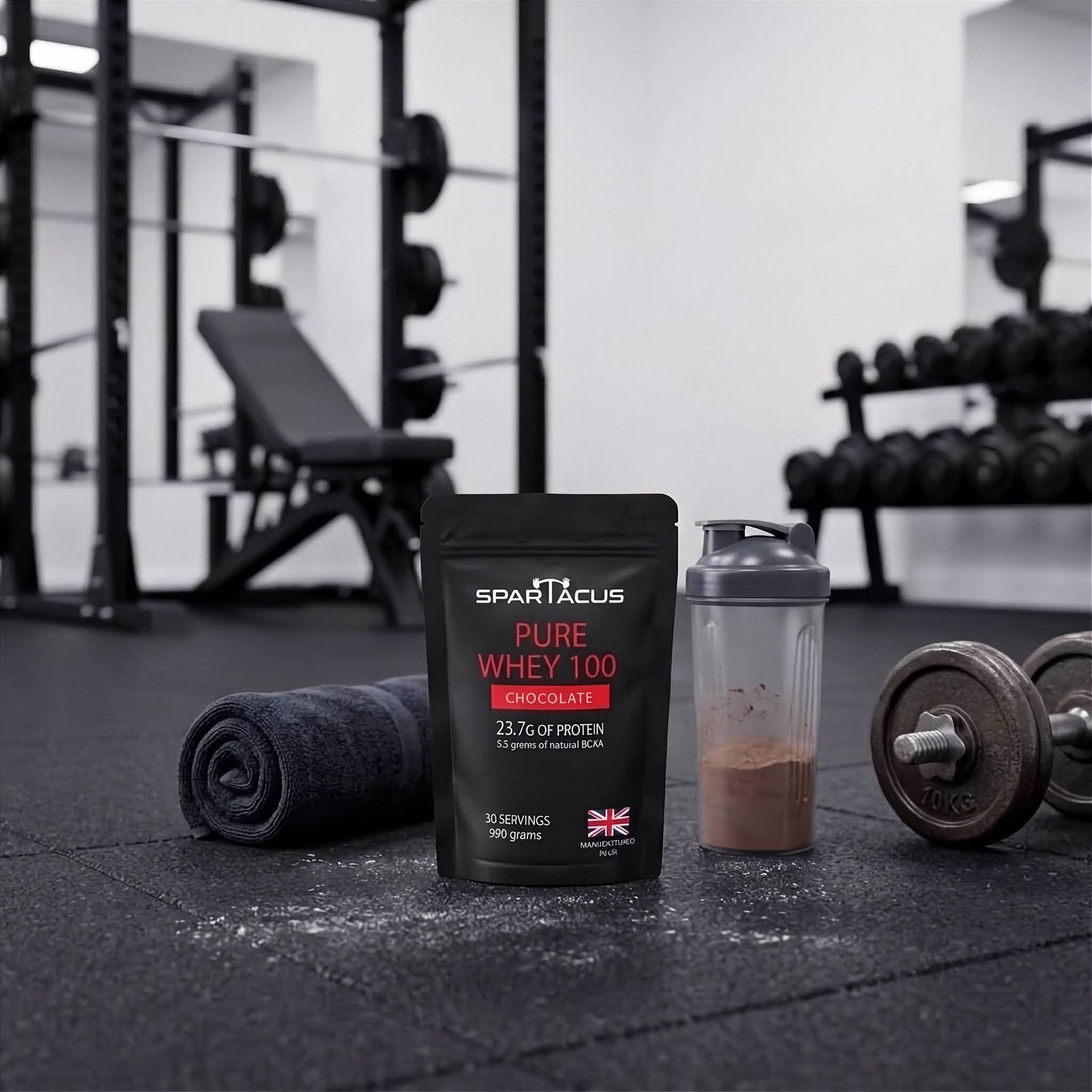
Spartacus Pure Whey 100, for example, uses WPC 80 whey protein concentrate in its current consumer product range. spartacusprotein.com
Whey Protein Isolate
Whey isolate typically undergoes additional processing and may contain a higher percentage of protein with lower levels of some other components.
Which format makes commercial sense depends on the target market, positioning and intended price point.
A premium brand may approach the decision differently from a mass-market or value-focused distributor.
Which Middle East Markets Can Private Label Whey Target?
A private-label whey brand does not need to target every country at once.
A more practical approach is to select priority markets.
Potential markets include:
- Saudi Arabia
- United Arab Emirates
- Kuwait
- Qatar
- Oman
- Bahrain
- Iraq
- Egypt
Each market can differ in:
- customer purchasing power
- supplement retail structure
- distributor networks
- regulatory requirements
- preferred pack sizes
- pricing expectations
- language requirements
- e-commerce maturity
A successful launch strategy should therefore be localized rather than treating the entire region as one identical market.
Private Label Whey Protein for Saudi Arabia
Saudi Arabia offers a large fitness and sports nutrition market with growing participation in gyms, bodybuilding and performance training.
A private-label brand targeting Saudi Arabia should think carefully about:
- Arabic and English labeling
- distributor relationships
- e-commerce channels
- gym partnerships
- price positioning
- product registration requirements
- reliable local availability
The commercial opportunity is not only selling tubs or pouches.
It is building a supply and distribution system that keeps the product available consistently.
Private Label Whey Protein for the UAE
The UAE is a highly competitive supplement market with both global and regional brands.
A new brand entering the UAE may need a particularly clear position.
That could include:
- value
- premium quality
- specific flavors
- strong serving economics
- attractive packaging
- gym partnerships
- specialized retail distribution
The UAE can also serve as a regional business hub for companies looking to expand into surrounding Gulf markets.
Private Label Whey Protein for Iraq
Iraq can represent a different type of opportunity.
Distribution relationships may be especially important because supplement availability often depends heavily on importers, wholesalers and established retail networks.
A private-label strategy for Iraq should therefore consider the distributor model from the beginning rather than treating distribution as an afterthought.
Private Label Whey Protein for Egypt
Egypt has a large fitness population and a highly price-sensitive consumer market.
For a whey protein brand entering Egypt, commercial questions may include:
- what pack size is affordable?
- what is the target retail price?
- should the product focus on concentrate rather than a more expensive formulation?
- which gyms and supplement stores can distribute it?
- what margin does the distributor need?
- how often will stock need to be replenished?
The right private-label product is not simply the one with the highest specifications.
It is the one that fits the economics of the target market.
Build a quote around the finished whey concentrate
Ask each supplier to quote the same finished pack. For example, specify a 1 kg pouch, the target grams of protein per serving, the serving weight and the destination. Then ask for two separate specifications if you are comparing an unflavored base and a chocolate or vanilla recipe. A concentrate grade such as WPC 80 describes the ingredient. The finished blend has its own protein level after cocoa, flavoring and other ingredients are added.
| Ask for | How to compare the answers |
|---|---|
| Protein declaration | Convert grams per serving to grams per 100 g of finished powder. A 30 g serving with 22 g protein is about 73 g protein per 100 g. |
| Formula and sample | Confirm the concentrate grade, allergen statement, sweetener and sample revision. Ask which changes would trigger another approval round. |
| Order minimum | Get the minimum by flavor and pack size in writing, with label printing and setup costs shown separately. |
| Batch release | Ask which finished-product specification and certificate of analysis will identify the lot you receive. |
Use the white label whey guide if you want an existing recipe with your branding. For a higher-protein isolate brief, see private label whey isolate. To buy branded packs for resale, use the wholesale whey distributor checklist. Send a concentrate brief through Spartacus private label enquiries.
Plan the rest of the product line
Use the sourcing briefs for mass gainer, pre-workout, creatine monohydrate, BCAA, L-glutamine and beef protein to specify the other formulas under your brand. The Spartacus manufacturing and packing page explains the supply chain behind our current range.
What Should a Distributor Ask a Whey Protein Manufacturer?
Before entering a private-label agreement, a distributor should ask clear commercial and product questions.
These include:
- What type of whey protein is used?
- How much protein is provided per serving?
- What flavors are available?
- What package sizes are available?
- What is the minimum order quantity?
- Can packaging be customized?
- Can the label be produced in Arabic and English?
- What is the expected production lead time?
- Which markets can the manufacturer supply?
- What documentation is available?
- How are shipping and logistics handled?
- Is territory exclusivity available?
- What margins are possible for distributors?
These questions help determine whether a manufacturing relationship is commercially viable before investing in branding and marketing.
What Is the Difference Between White Label and Private Label?
The terms are sometimes used interchangeably, but there can be a practical distinction.
White Label
A white-label product is generally an existing formula that can be branded and sold by another company.
This can allow a faster launch.
Private Label
Private label can involve more customization around:
- formulation
- flavors
- serving size
- packaging
- branding
- product positioning
The exact definition depends on the manufacturer and agreement.
Businesses should therefore focus less on the terminology and more on what can actually be customized.
How Much Does It Cost to Launch a Private Label Whey Brand?
There is no single price.
The total investment can depend on:
- order quantity
- whey type
- flavor
- pack size
- packaging
- label production
- design
- shipping
- regulatory requirements
- destination country
For this reason, B2B buyers should request a commercial quotation based on their intended market and volume rather than relying on a generic unit price.
Do You Need a Large Order to Start?
This depends on the manufacturing arrangement.
Some manufacturers work only with high-volume distributors, while others may support smaller initial orders.
For a new brand, the ideal starting quantity should balance two risks:
ordering too little and running out quickly if the product succeeds,
versus
ordering too much before demand has been proven.
A phased launch can sometimes make more commercial sense than committing immediately to a very large inventory.
Can a Distributor Get Exclusive Territory?
Territory exclusivity may be possible in some B2B agreements, but it depends on the manufacturer, country, order volume and sales commitment.
A manufacturer may evaluate:
- distributor experience
- existing retail network
- projected order volume
- marketing capability
- market coverage
- payment terms
- long-term growth potential
An exclusivity discussion should therefore be treated as a business negotiation rather than an automatic part of private labeling.
Can You Sell Private Label Whey Under Your Own Brand?
Yes. That is the core purpose of private labeling.
The distributor or business owner creates the consumer-facing brand while the manufacturing partner produces the product according to the agreed arrangement.
The brand owner is then responsible for building demand through channels such as:
- supplement stores
- gyms
- e-commerce
- marketplaces
- social media
- influencers
- trainers
- wholesale distribution
Is Private Label Whey Better Than Distributing an Existing Brand?
Neither model is automatically better.
Distributing an existing brand can provide:
- existing brand awareness
- proven products
- established marketing material
Private labeling can provide:
- ownership of the brand
- more control over positioning
- stronger differentiation
- potentially greater control over margins
- the ability to build long-term brand equity
The right model depends on the distributor’s resources and goals.
Why Spartacus Is Relevant to B2B Buyers
Spartacus currently sells sports nutrition products including Pure Whey 100 and Creatine 5000, with a UK supply partnership and packaging in Jordan described on Spartacus’s manufacturer disclosure. The current store lists Pure Whey 100 at 35–62 JOD and Creatine 5000 at 15 JOD in Jordan. spartacusprotein.com
For B2B buyers, however, the relevant conversation is different from retail pricing.
The important questions are manufacturing capability, available formats, quantities, branding, market rights, supply and commercial terms.
Those details should be discussed directly as part of a B2B inquiry.
Frequently Asked Questions
What is private label whey protein?
It is whey protein manufactured by one company and sold under another company’s brand.
Can I launch my own whey protein brand in the Middle East?
Yes, subject to manufacturing arrangements, local regulations, branding, distribution and product registration requirements in the target country.
Can I private label whey protein for Saudi Arabia?
A private-label product can potentially be developed for the Saudi market, but the commercial and regulatory requirements should be confirmed before launch.
Can I distribute whey protein in Iraq?
Yes, businesses can explore distributor arrangements for Iraq, depending on supply terms, local requirements and the commercial agreement.
Can I launch a whey protein brand in Egypt?
Yes. Egypt can be approached through private label, distribution or other commercial models depending on the target market and pricing strategy.
Can I customize the packaging?
Packaging customization depends on the manufacturing agreement and available production options.
What should I ask before requesting a quote?
Prepare your target country, intended quantity, pack size, preferred flavor, target customer, desired branding and expected distribution model.
Registration and label checks before a private-label launch
A specification and quotation do not establish permission to sell in another country. Assign responsibility for reviewing the finished formula, claims, Arabic label where required, manufacturer and packer identity, and import or product-registration route before printing. For Saudi Arabia, check the current SFDA food-labeling regulations FAQ and, where the finished product is classified as a food supplement, the SFDA supplement-registration FAQ (SFDA.FD 55); for Dubai, consult Dubai Municipality’s Montaji information; and for Jordan, see the JFDA. These links are starting points, not a determination of classification or approval for any specific whey formula; confirm current requirements with the destination authority and qualified local importer.
Final Thoughts
Private-label whey protein can give distributors, retailers, gym operators and entrepreneurs a path to launching their own sports nutrition brand without building a manufacturing facility.
For Middle East expansion, the commercial opportunity extends across the Gulf as well as Iraq and Egypt.
But the decision should not start with packaging.
It should start with:
target market + product type + positioning + volume + distribution strategy + commercial terms. If you have a proposed whey product, share the target country, formula specification, flavor, pack size and estimated order volume through Spartacus private-label enquiries. The team can then confirm whether a suitable formula, quantity and production route are available; no MOQ or launch date is implied by this guide.