


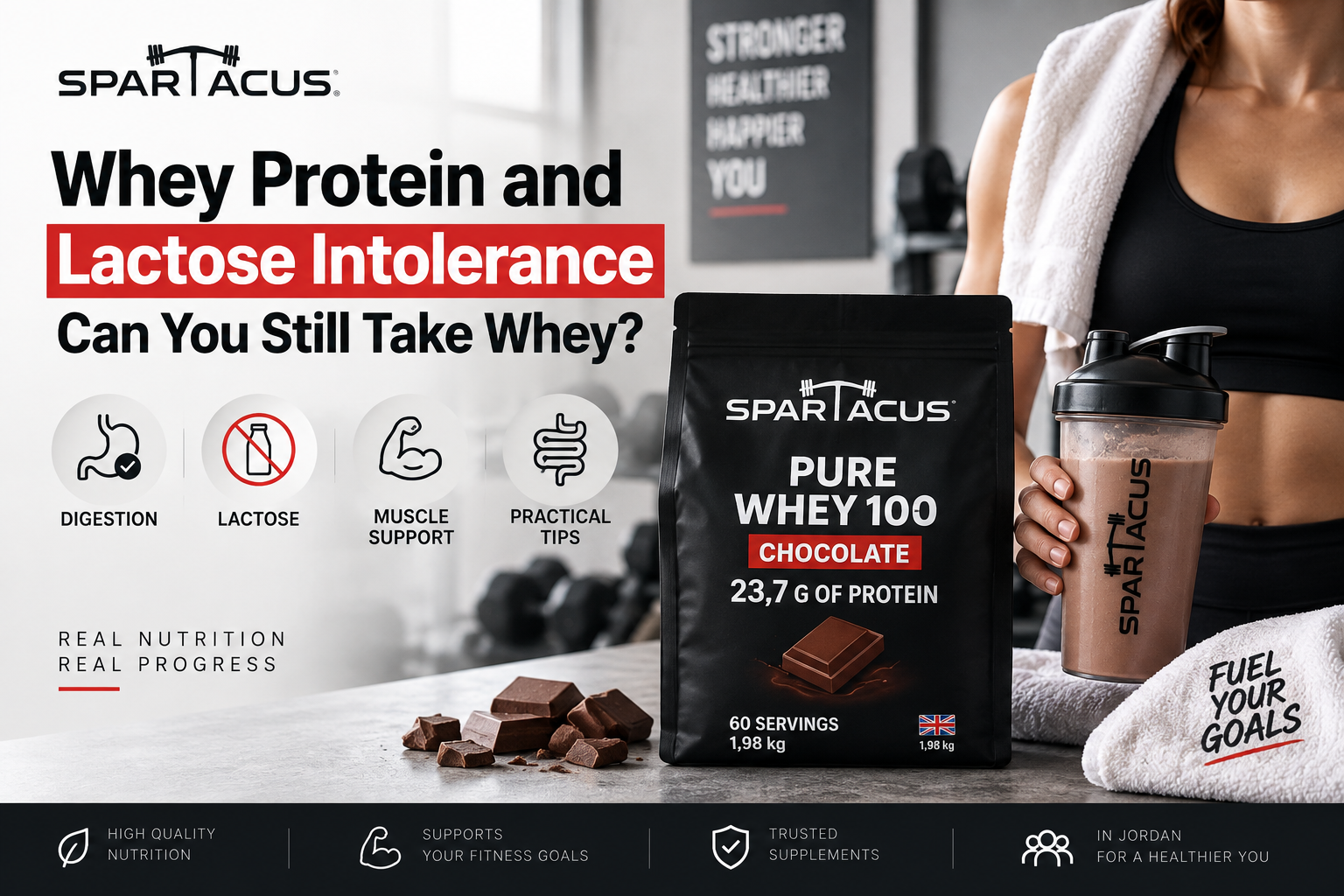
Whey protein and lactose intolerance can seem confusing at first, especially if you experience bloating or digestive discomfort after drinking a protein shake. The good news is that some people with lactose intolerance can still use whey protein, depending on the type of whey, serving size, and individual tolerance.
Whey protein comes from milk, so some whey products can contain lactose.
However, the amount of lactose can vary depending on the type of whey protein and how it is processed.
Some people with lactose intolerance can tolerate small amounts of lactose without symptoms, while others are more sensitive. The NIDDK notes that tolerance varies from person to person, and many people with lactose intolerance can consume some lactose without symptoms.
The main questions are:
- Does whey protein contain lactose?
- Is whey concentrate higher in lactose than isolate?
- Can you mix whey with water instead of milk?
- What should you do if whey causes bloating?
- How can you tell whether the problem is lactose intolerance?
What Is Lactose Intolerance?
Lactose intolerance is a digestive condition in which the body has difficulty digesting lactose, the natural sugar found in milk and dairy products.
This happens when the small intestine produces too little lactase, the enzyme needed to break down lactose.
When lactose is not fully digested, it can reach the colon and contribute to digestive symptoms.
Common symptoms may include:
- Bloating
- Gas
- Diarrhea
- Abdominal discomfort
- Nausea
- Stomach rumbling
Symptoms and tolerance can vary substantially from person to person.
Does Whey Protein Contain Lactose?
Whey protein is derived from milk.
That means whey-based products may contain some lactose.
How much lactose remains depends partly on how the whey has been processed.
This is why people with lactose intolerance may tolerate one whey product better than another.
Whey Concentrate and Lactose
Whey protein concentrate generally retains more of the non-protein components of milk than whey isolate.
That can include some:
- Lactose
- Fat
- Carbohydrates
The exact amount varies by product.
For someone who is very sensitive to lactose, whey concentrate may be more likely to cause symptoms than a more highly processed whey product.
Whey Isolate and Lactose
Whey protein isolate is processed further than concentrate.
It generally contains:
- A higher percentage of protein
- Less carbohydrate
- Less fat
- Less lactose
For that reason, some people with lactose intolerance may tolerate whey isolate better than whey concentrate.
However, “lower lactose” does not automatically mean “completely lactose-free.”
Always check the product label.
Can Lactose-Intolerant People Take Whey Protein?
Some can.
Lactose intolerance exists on a spectrum.
The NIDDK notes that most people with lactose intolerance can consume some amount of lactose without symptoms, but individual tolerance varies.
That means one person may tolerate a whey concentrate shake without difficulty, while another may experience symptoms.
The practical approach is to pay attention to:
- Product type
- Serving size
- Total dairy intake
- Whether you mix it with milk
- Your own symptoms
Is Whey Protein the Same as Milk?
No.
Whey protein comes from milk, but a protein powder is not nutritionally identical to a glass of milk.
Milk contains:
- Lactose
- Protein
- Carbohydrates
- Minerals
- Sometimes fat
A whey protein product is more concentrated in protein and may contain less lactose than regular milk, depending on the form and processing.
Whey Concentrate vs Isolate for Lactose Intolerance
The main difference for someone concerned about lactose is usually the amount that remains after processing.
Whey concentrate
Usually contains:
- High-quality protein
- Some lactose
- Some carbohydrates
- Some fat
Whey isolate
Usually contains:
- More protein by percentage
- Less lactose
- Less carbohydrate
- Less fat
If lactose tolerance is your main concern, isolate may be easier for some people to tolerate.
But individual response still matters.
Does Whey Protein Cause Bloating?
It can, but bloating does not automatically mean lactose intolerance.
Possible reasons for bloating after a protein shake can include:
- Lactose
- Large serving size
- Drinking the shake too quickly
- Added sweeteners
- Other ingredients
- Mixing the shake with milk
- Individual digestive sensitivity
Lactose intolerance is one possible explanation, but not the only one.
How Can You Tell If Lactose Is the Problem?
Typical lactose-intolerance symptoms can occur within several hours after consuming lactose-containing foods or drinks.
These may include:
- Gas
- Bloating
- Diarrhea
- Abdominal pain
- Nausea
The NIDDK notes that other digestive conditions can cause similar symptoms, so persistent symptoms should not automatically be self-diagnosed as lactose intolerance.
If symptoms are frequent or severe, speak with a qualified healthcare professional.
Can You Test Your Tolerance With a Smaller Serving?
For some people, yes.
Because lactose tolerance varies, a smaller amount may produce fewer symptoms.
The NIDDK notes that many people with lactose intolerance can tolerate some lactose, especially in smaller amounts.
A practical approach may be to:
- Start with a smaller serving
- Mix it with water
- Avoid adding regular milk
- Monitor how you feel
If symptoms occur consistently, stop and reassess.
Whey Protein With Water vs Milk for Lactose Intolerance
If lactose is the concern, mixing whey with water avoids adding additional lactose from regular milk.
Mixing whey with milk adds:
- More lactose
- More calories
- More protein
- More carbohydrates
If you are sensitive to lactose, water or lactose-free milk may be easier to tolerate.
For more detail, read:
Whey Protein With Milk or Water: Which Is Better?
https://spartacusprotein.com/whey-protein-with-milk-or-water/
Can You Use Lactose-Free Milk With Whey Protein?
Yes.
Lactose-free or lactose-reduced milk can help lower the amount of lactose in your shake.
The NIDDK lists lactose-free and lactose-reduced milk products as options that may help people manage lactose intolerance symptoms.
However, remember that the whey powder itself may still contain some lactose depending on the product.
Can Lactase Help?
Some people use lactase products to help digest lactose.
Lactase is the enzyme that breaks down lactose.
The NIDDK notes that lactase tablets or drops can help some people manage lactose intolerance symptoms.
If you are considering lactase products and have medical concerns, speak with a healthcare professional.
Whey Protein and Milk Allergy Are Not the Same Thing
This is very important.
Lactose intolerance is not the same as a milk allergy.
Lactose intolerance is a digestive issue related to lactose digestion.
A milk allergy is an immune-system reaction to milk proteins.
The NIDDK specifically distinguishes the two conditions and notes that milk allergy can be much more serious.
If you have a diagnosed milk allergy, whey protein may not be appropriate because whey itself is a milk protein.
Is Whey Protein Safe With a Milk Allergy?
This article is about lactose intolerance, not milk allergy.
Someone with a milk allergy should not assume that a lower-lactose whey product is safe.
Reducing lactose does not remove the milk proteins that can trigger an allergic reaction.
Anyone with a suspected or diagnosed milk allergy should follow professional medical advice.
Whey Protein for Muscle Gain With Lactose Intolerance
If you tolerate whey protein, it can still be used as part of a muscle-building diet.
Whey provides all essential amino acids and is widely used in sports nutrition. The NIH notes that whey is a complete protein commonly used in protein powders and drinks.
Muscle gain still depends on:
- Progressive resistance training
- Adequate protein
- Enough calories
- Recovery
- Sleep
If whey concentrate causes symptoms, another protein source may be more practical.
Whey Protein for Weight Loss With Lactose Intolerance
Whey protein can still fit into a calorie-controlled diet if you tolerate it.
If lactose is the issue, consider:
- Mixing with water
- Using lactose-free milk
- Checking whether a lower-lactose protein option suits you better
- Monitoring portion size
Weight loss still depends mainly on total calorie intake.
Whey Protein for Recovery With Lactose Intolerance
Protein supports muscle repair and recovery after training. The NIH notes that adequate protein provides the essential amino acids needed for building and repairing muscle.
If whey concentrate causes digestive discomfort, the best recovery protein is the one you can tolerate while still meeting your protein needs.
Can You Take Whey Protein on Rest Days If You Are Lactose Intolerant?
Yes, if you tolerate the product.
Rest days do not change whether lactose causes symptoms.
The same considerations apply:
- Type of whey
- Serving size
- Mixer
- Individual tolerance
- Total dairy intake
Should You Avoid All Dairy If You Are Lactose Intolerant?
Not necessarily.
The NIDDK notes that many people with lactose intolerance can tolerate some lactose, and complete avoidance of dairy is not always required.
Some people may tolerate:
- Small amounts of dairy
- Yogurt
- Hard cheeses
- Lactose-free dairy
Tolerance varies.
What About Calcium and Vitamin D?
If you reduce or avoid dairy because of lactose intolerance, it is important to make sure your diet still provides enough calcium and vitamin D.
The NIDDK notes that avoiding dairy completely can reduce intake of these nutrients if they are not replaced with other sources.
Spartacus Pure Whey 100 and Lactose
Spartacus Pure Whey 100 uses WPC 80 whey protein concentrate.
The current Spartacus product information lists approximately:
23.7 g of protein per serving for the chocolate version.
Because it is a whey protein concentrate, it should not be described as lactose-free unless the product label or manufacturer specifically confirms that.
If you have lactose intolerance:
- Start with your personal tolerance in mind
- Consider mixing it with water instead of regular milk
- Monitor digestive symptoms
- Stop using it if it repeatedly causes discomfort
What If Whey Concentrate Causes Symptoms?
If whey concentrate repeatedly causes symptoms, options can include:
- Trying a lower-lactose whey product
- Using a non-dairy protein source
- Reducing serving size
- Using water instead of milk
- Discussing symptoms with a healthcare professional
Do not force yourself to use a protein powder that consistently causes digestive problems.
Non-Dairy Protein Alternatives
People who cannot tolerate whey may consider other protein sources.
These can include:
- Soy protein
- Pea protein
- Rice protein
- Blended plant proteins
- Protein-rich whole foods
Different protein sources have different amino-acid profiles, so product quality and overall dietary protein still matter.
Common Mistakes With Whey and Lactose Intolerance
Assuming all whey contains the same amount of lactose
Processing differs between whey concentrate and isolate.
Assuming bloating always means lactose intolerance
Other ingredients or digestive issues can also contribute.
Mixing whey with regular milk
This adds additional lactose.
Confusing lactose intolerance with milk allergy
They are different conditions.
Ignoring persistent symptoms
Repeated digestive symptoms should be investigated rather than ignored.
Assuming “isolate” always means zero lactose
Check the label.
Frequently Asked Questions
Does whey protein contain lactose?
Whey comes from milk, and many whey products contain some lactose. The amount varies by product and processing.
Can lactose-intolerant people drink whey protein?
Some can tolerate it, especially in smaller amounts or lower-lactose forms. Individual tolerance varies.
Is whey isolate better for lactose intolerance?
It often contains less lactose than whey concentrate, so some people may tolerate it better.
Is whey concentrate bad for lactose intolerance?
Not necessarily. Some people tolerate small amounts, while others experience symptoms.
Can I mix whey with water if I am lactose intolerant?
Yes. Water avoids adding extra lactose from regular milk.
Can I use lactose-free milk with whey protein?
Yes. It can reduce the lactose contributed by the mixer.
Does whey protein cause bloating?
It can in some people, but bloating can have several causes and does not automatically mean lactose intolerance.
Is lactose intolerance the same as milk allergy?
No. Lactose intolerance is a digestive problem, while milk allergy involves the immune system.
Can I use whey protein for muscle gain if I am lactose intolerant?
Yes, if you tolerate the product and it helps you reach your protein needs.
What should I do if whey always causes stomach problems?
Stop using it and consider another protein source or speak with a healthcare professional, especially if symptoms are persistent.
Final Thoughts: Whey Protein and Lactose Intolerance
Having lactose intolerance does not automatically mean you cannot use whey protein.
Tolerance varies from person to person.
The most important things to consider are:
- The type of whey protein
- How much lactose it contains
- Serving size
- Whether you mix it with milk or water
- Your individual digestive response
- Whether symptoms are actually caused by lactose
Whey concentrate generally contains more lactose than whey isolate, but exact amounts vary by product.
Spartacus Pure Whey 100 uses WPC 80 whey protein concentrate and provides approximately 23.7 g of protein per serving in the chocolate version.
If you tolerate it well, it can still be used as part of your daily protein intake. If it repeatedly causes symptoms, another protein option may be more appropriate.
Scientific Sources
National Institute of Diabetes and Digestive and Kidney Diseases — Lactose Intolerance
NIH Office of Dietary Supplements — Exercise and Athletic Performance: Protein