


If you are looking for whey protein for recovery in Jordan, the main reason to use it is simple: whey protein can help you reach the protein intake needed to support muscle repair and adaptation after training.
Whey protein does not “heal” muscles instantly, and it does not replace sleep, calories, hydration, or proper training.
But it can be a practical post-workout protein source because it is:
- High in protein
- Rich in essential amino acids
- Relatively fast-digesting
- Convenient after training
- Easy to fit into a structured nutrition plan
For active people, recovery depends on much more than one shake, but protein is an important part of the process.
What Does Muscle Recovery Mean?
Muscle recovery is the process your body goes through after training.
Resistance training creates stress in the muscles and stimulates adaptation.
During recovery, the body works to:
- Repair muscle tissue
- Restore energy stores
- Adapt to training
- Support future performance
- Rebuild muscle proteins
Recovery is therefore not just about soreness.
It is about allowing your body to adapt to the training you have done.
Why Is Protein Important for Recovery?
Protein provides amino acids that the body uses to repair and remodel muscle tissue.
After resistance exercise, muscle protein synthesis increases.
Consuming adequate protein helps provide the amino acids needed for this process.
The most important factors are:
- Total daily protein intake
- Protein quality
- Consistency
- Training quality
- Overall calorie intake
- Sleep and recovery
A protein shake can support recovery, but it works best as part of a complete nutrition plan.
Why Use Whey Protein After Training?
Whey protein is popular after training because it provides a concentrated source of high-quality protein.
It contains all essential amino acids and is naturally rich in leucine, an amino acid involved in stimulating muscle protein synthesis.
For someone who does not feel like eating a full meal immediately after training, whey can be convenient.
It can also be useful for people who:
- Train late
- Have limited time after workouts
- Struggle to hit daily protein targets
- Need a quick source of protein
- Prefer a shake after training
Does Whey Protein Speed Up Recovery?
Whey protein can support the muscle-repair process by supplying amino acids after exercise.
However, recovery is influenced by several factors.
Whey protein alone cannot compensate for:
- Too little sleep
- Inadequate calories
- Dehydration
- Excessive training volume
- Poor programme design
- Very low carbohydrate intake when training demands are high
Think of whey protein as one part of the recovery system.
How Much Protein Do You Need After Training?
A commonly used sports-nutrition recommendation is around:
20–40 g of high-quality protein per serving
depending on:
- Body size
- Age
- Training intensity
- Total daily protein intake
- Training goals
The most important thing is not one perfect post-workout dose.
Your total protein intake across the day matters more.
How Much Protein Do You Need Per Day for Recovery?
Daily protein needs vary.
For active adults, recommendations commonly fall around:
1.2–2.0 g of protein per kilogram of body weight per day
depending on training level and goals.
For example, an 80 kg person may consume approximately:
96–160 g of protein per day
depending on training demands and overall nutrition.
If you want a deeper breakdown, link to your existing article:
How Much Protein Do You Need to Build Muscle?
Whey Protein for Recovery After Resistance Training
Resistance training places stress on muscle tissue.
Protein intake after training can support:
- Muscle protein synthesis
- Tissue repair
- Adaptation
- Lean-mass maintenance
- Training recovery
Whey protein is especially practical because it is easy to consume after a workout.
But recovery still depends on:
- Enough total protein
- Adequate calories
- Good sleep
- Appropriate training volume
- Rest days when needed
Whey Protein for Recovery After Cardio
Protein can also be useful after cardio, especially if the session is long or intense.
For endurance-style training, recovery may also depend heavily on carbohydrate intake.
Protein can support muscle repair, while carbohydrates help replenish glycogen.
For long or demanding sessions, both may matter.
Is Whey Protein Better Than Food for Recovery?
Not necessarily.
Whole foods can provide excellent protein.
Examples include:
- Chicken
- Eggs
- Greek yogurt
- Milk
- Fish
- Lean meat
- Legumes
Whey protein is mainly useful because of convenience.
If you can eat a balanced meal after training, that can work perfectly well.
Whey is not automatically superior to real food.
Whey Protein vs Whole Foods After Workout
The main difference is convenience.
Whey protein:
- Is quick to prepare
- Is easy to digest for many people
- Provides protein without a large meal
- Can be consumed immediately after training
Whole foods:
- Can provide more nutrients
- May provide fiber
- May provide carbohydrates and fats
- Can be more filling
Both can work.
Whey Protein Before or After Training for Recovery?
Either can work.
If you ate a protein-rich meal before training, you may not need to rush to drink a shake immediately after.
If your last meal was several hours before training, a post-workout protein source can be more useful.
Total daily protein matters more than a narrow “anabolic window.”
For more detail, link to:
Whey Protein Before or After Workout?
How Soon After Training Should You Take Whey Protein?
You do not need to consume whey protein within a few minutes of finishing your workout.
A reasonable approach is simply to have a protein-rich meal or shake within the next few hours.
The exact timing is less important than:
- Total daily protein
- Consistent intake
- Regular meals
- Overall nutrition quality
Does Whey Protein Reduce Muscle Soreness?
Whey protein may support muscle repair, but it does not guarantee that you will not feel sore.
Delayed-onset muscle soreness can be influenced by:
- New exercises
- Training volume
- Eccentric loading
- Training intensity
- Recovery status
Protein can support recovery, but soreness is not controlled by protein alone.
What Else Helps Muscle Recovery?
Recovery depends on several things working together.
Sleep
Sleep is one of the most important recovery tools.
Calories
Eating too little can make recovery more difficult.
Protein
Adequate protein supports muscle repair.
Carbohydrates
Carbohydrates help restore glycogen, especially after demanding training.
Hydration
Dehydration can affect performance and recovery.
Rest
Training hard every day without appropriate recovery can limit progress.
Whey Protein and Carbohydrates for Recovery
After demanding training, combining protein and carbohydrates can be useful.
Protein supports muscle repair.
Carbohydrates help replenish muscle glycogen.
This can be especially useful for:
- High-volume training
- Multiple sessions per day
- Endurance exercise
- Team sports
- Long workouts
If your training session is short and moderate, your normal meals may already provide enough.
Whey Protein and Creatine for Recovery
Whey protein and creatine have different roles.
Whey protein helps increase protein intake.
Creatine supports muscle creatine stores and repeated high-intensity performance.
They can be used together.
For convenience, some people mix creatine into a whey shake after training.
You can internally link to:
Creatine and Whey Protein Together
Whey Protein for Recovery During Muscle Gain
During a muscle-building phase, recovery is especially important.
You need:
- Progressive resistance training
- Enough calories
- Adequate protein
- Sleep
- Consistency
Whey protein can help fill protein gaps.
If muscle gain is your main goal, link to:
Best Whey Protein for Muscle Gain in Jordan
Whey Protein for Recovery During Weight Loss
Recovery can become more challenging when calories are lower.
During a calorie deficit, protein becomes especially important for supporting lean mass.
Whey protein can help you:
- Maintain protein intake
- Support recovery
- Preserve lean mass
- Manage calories more easily
You can link to:
Whey Protein for Weight Loss in Jordan
Can Beginners Use Whey Protein for Recovery?
Yes.
Beginners can use whey protein if they need help reaching their daily protein target.
However, beginners should not focus only on supplements.
The foundations are:
- Learn proper technique
- Train consistently
- Eat enough protein
- Sleep well
- Recover properly
Whey protein is optional.
Can Women Use Whey Protein for Recovery?
Yes.
Women can use whey protein for the same basic reasons as men.
It can help support:
- Protein intake
- Recovery
- Muscle maintenance
- Resistance training
- Body-composition goals
If relevant, link to:
Whey Protein for Women in Jordan
Is Whey Concentrate Good for Recovery?
Yes.
Whey concentrate can be a good post-workout protein source.
It provides:
- High-quality protein
- Essential amino acids
- Leucine
- Convenient digestion
You do not need isolate for recovery unless you prefer it for other reasons, such as lower lactose or lower carbohydrate content.
Whey Concentrate vs Isolate for Recovery
Both can work.
Whey concentrate
Usually contains:
- High-quality protein
- Some carbohydrates
- Some fat
- Some lactose
Whey isolate
Usually contains:
- Higher protein percentage
- Less carbohydrate
- Less fat
- Less lactose
The difference in recovery results is usually less important than total protein intake.
Can You Take Whey Protein Every Day for Recovery?
Yes, if it fits your diet and you tolerate it well.
You do not need whey every day if food already provides enough protein.
Think of it as a convenient protein source rather than a requirement.
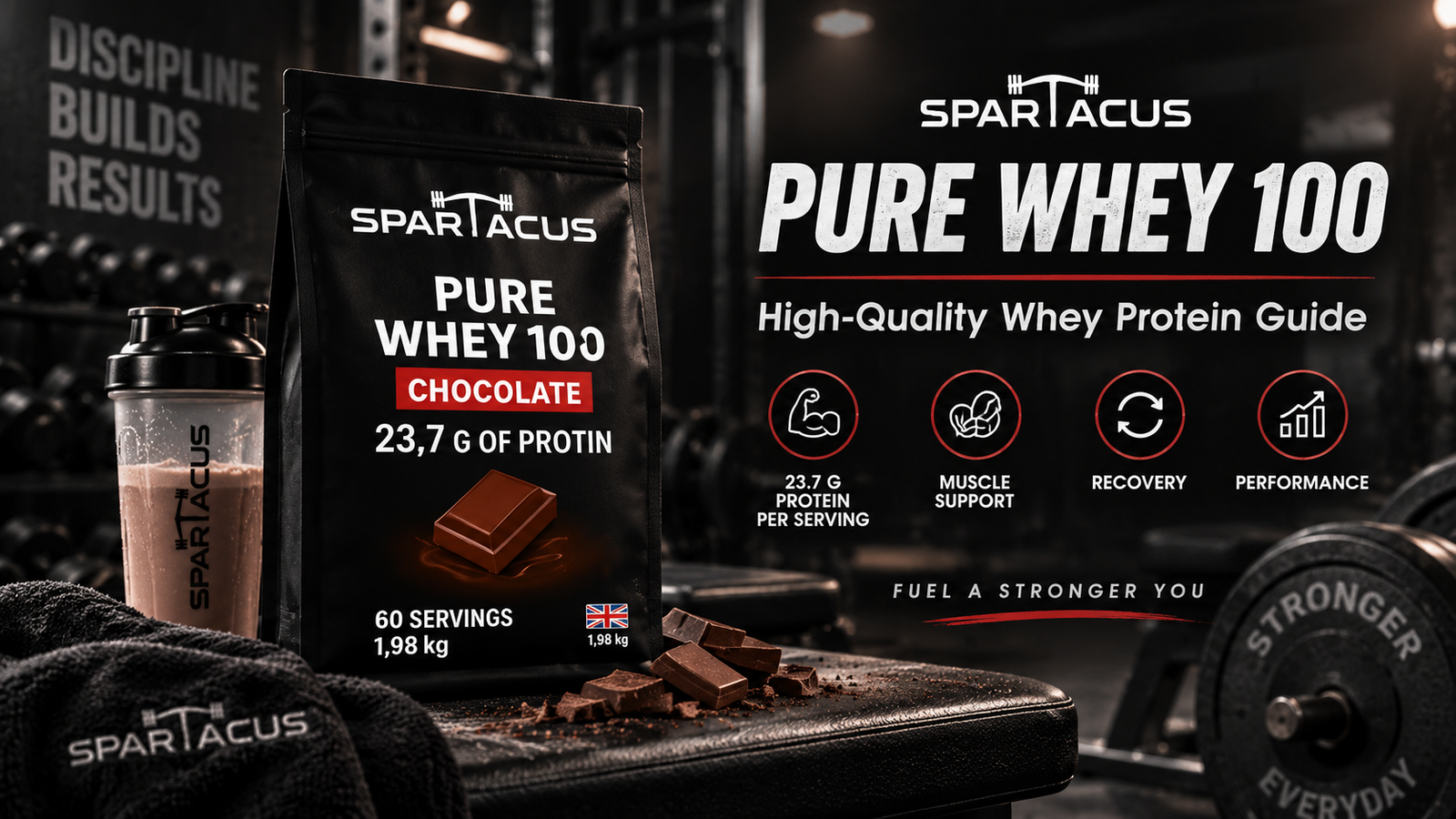
Spartacus Pure Whey 100 for Recovery
For people looking for whey protein in Jordan, Spartacus Pure Whey 100 provides approximately:
23.7 g of protein per serving
and uses WPC 80 whey protein concentrate.
This can make it a practical post-workout protein option for people who want to support:
- Daily protein intake
- Muscle recovery
- Resistance training
- Muscle maintenance
- Muscle-building nutrition
The product should be used as part of a complete training and nutrition plan.
Common Recovery Mistakes
Relying only on supplements
Supplements cannot replace sleep or proper nutrition.
Eating too little protein overall
One shake cannot fix a very low-protein diet.
Ignoring carbohydrates
Carbohydrates can matter for glycogen recovery.
Training too much
Recovery becomes difficult if training volume is too high.
Sleeping too little
Poor sleep can reduce recovery quality.
Expecting whey to remove soreness completely
Protein supports recovery but does not eliminate soreness.
Frequently Asked Questions
Is whey protein good for recovery?
Yes. Whey protein can help provide amino acids needed for muscle repair and adaptation after training.
How much whey protein should I take after training?
A commonly used serving is around 20–40 g of high-quality protein, depending on your needs.
Do I need whey protein immediately after training?
No. Total daily protein intake is more important than consuming whey immediately after your final set.
Does whey protein reduce muscle soreness?
It may support recovery, but it does not guarantee reduced soreness.
Is whey concentrate good for recovery?
Yes. Whey concentrate can provide high-quality protein and amino acids for recovery.
Is whey isolate better for recovery?
Not necessarily. Both concentrate and isolate can work.
Can I take whey protein and creatine together?
Yes. They perform different roles and can be used together.
Can whey protein help recovery during weight loss?
Yes. It can help maintain protein intake and support lean mass while calories are lower.
Can women use whey protein for recovery?
Yes.
Can beginners use whey protein after training?
Yes, if it helps them reach their daily protein needs.
Final Thoughts: Whey Protein for Recovery in Jordan
Using whey protein for recovery in Jordan can be a practical way to support daily protein intake after training.
Whey protein can help provide amino acids needed for muscle repair and adaptation, but recovery also depends on:
- Total protein intake
- Calories
- Carbohydrates
- Hydration
- Sleep
- Training structure
- Rest
Spartacus Pure Whey 100 provides approximately 23.7 g of protein per serving, making it a practical protein option for people who want to support recovery after training.