


If you’re new to sports nutrition, whey protein for beginners can seem more complicated than it needs to be. How many scoops should you take? Should you drink it before or after training? Is it better with water or milk? And do you even need a protein shake every day?
The simple answer is that whey protein is a convenient source of high-quality dietary protein. It can help you meet your daily protein needs, but it does not replace a balanced diet or consistent training.
For beginners, the most useful approach is to understand your overall protein needs first, then use whey protein when it makes reaching that target easier.
This guide explains what whey protein is, how much to take, when to use it, how to mix it, whether to take it on rest days, and how to fit it into your training and nutrition routine.
What Is Whey Protein?
Whey is one of the main proteins found in milk. During dairy processing, whey can be separated and processed into protein powders used in sports nutrition products.
Common forms include whey protein concentrate, whey protein isolate, and whey protein hydrolysate.
These products differ in their processing and nutritional composition, so you should always check the nutrition information for the specific product you are using.
Whey is popular among athletes and gym-goers because it provides protein and essential amino acids in a convenient form.
However, whey protein is still simply a way of adding dietary protein to your nutrition plan. It is not a shortcut that replaces training, recovery, or an appropriate diet.
Is Whey Protein Good for Beginners?
Yes. Healthy adults who exercise can use whey protein as part of their diet when it helps them meet their protein requirements.
You do not need to reach a certain training level before you can use whey protein.
What matters more is understanding why you are using it.
If your regular meals already provide enough protein for your needs, you may not need a protein shake. If reaching your protein target through food is difficult or inconvenient, whey can provide a practical option.
For example, someone with a busy schedule may find it easier to prepare a shake after training than immediately prepare another full meal.
Think of whey protein as a tool for convenience rather than the foundation of your muscle-building plan.
How Much Whey Protein Should a Beginner Take?
There is no single number of scoops that every beginner should take.
Your whey protein intake should be considered as part of your total daily protein intake, not as a separate requirement.
The International Society of Sports Nutrition reports that approximately 1.4–2.0 grams of protein per kilogram of body weight per day is sufficient for most exercising individuals who want to build or maintain muscle mass. It also identifies approximately 20–40 grams of high-quality protein per serving as a general recommendation, depending on factors such as body size, age and training.
For example, if your daily protein target is 130 grams and your regular meals already provide approximately 105 grams, a whey protein serving providing around 25 grams could help close that gap.
If your food already provides the full 130 grams, an additional shake is not automatically necessary.
For a more detailed explanation of calculating protein according to body weight, read our guide to How Much Protein Do You Need to Build Muscle?
Is One Scoop of Whey Protein Enough?
It depends on the product and your daily protein needs.
A scoop is a measure of powder, not a universal amount of protein. Different products can have different scoop sizes and protein contents.
Always use the serving information printed on your specific product rather than assuming that every scoop contains the same amount.
The important question is not simply:
“How many scoops should I take?”
A better question is:
“How much protein do I need today, and how much am I already getting from food?”
Once you know that, you can decide whether a whey protein shake would be useful.
When Should Beginners Take Whey Protein?
There is no single mandatory time to drink whey protein.
You can use it:
- After a workout
- Before training if it fits your meal schedule
- Between meals
- With breakfast
- As part of a snack
- At another convenient time when your regular food intake is low in protein
Research summarized by the International Society of Sports Nutrition indicates that protein intake before or after resistance exercise can support muscle protein synthesis, while total daily protein intake remains a major priority.
For most beginners, therefore, consistency and total daily protein intake matter more than chasing a very narrow timing window.
Should You Drink Whey Protein After a Workout?
After training is a convenient time to use whey protein, but you do not need to rush to drink a shake immediately after your final set.
Resistance training and protein intake work together to support muscle protein remodeling and adaptation.
If a post-workout shake helps you reach your daily protein requirements, it can fit very well into your routine.
But if you ate a protein-rich meal before training and plan to eat another balanced meal afterward, you should not assume that missing an immediate shake will ruin your progress.
Your overall diet and training consistency matter much more.
For a deeper discussion of timing, see our guide to Whey Protein Before or After Workout?
Can You Take Whey Protein Before a Workout?
Yes.
Whey protein can also be consumed before training if that timing suits your schedule and digestion.
For example, someone who has not eaten a protein-containing meal for several hours may choose to have a shake before heading to the gym.
Other people may prefer eating a regular meal before training and saving their shake for afterward.
Neither approach needs to become complicated.
Choose a routine that helps you meet your daily nutritional requirements and feels comfortable during training.
Whey Protein With Water or Milk: Which Is Better?
Both can work.
Whey Protein With Water
Mixing whey protein with water is simple and generally adds little or no additional energy beyond the protein powder itself.
It can be useful when you want a straightforward shake or when your overall calorie intake is something you are monitoring closely.
Whey Protein With Milk
Milk adds additional protein, carbohydrates, calories and other nutrients to the shake.
This can be useful for someone who wants a more substantial drink or is trying to increase overall energy intake.
The better choice depends on your goals, preferences and overall diet.
Neither water nor milk makes whey protein automatically “work better.” Consider what the complete drink contributes to your daily nutrition.
How Do You Mix Whey Protein?
Always begin with the serving and preparation instructions on your specific product.
In general, whey protein powder can be added to an appropriate amount of water or milk and mixed using a shaker bottle or blender.
For Spartacus Pure Whey 100, the current product information recommends mixing one scoop of approximately 33 grams with 200–300 ml of cold water or milk. The product is made using whey protein concentrate (WPC 80).
Follow the instructions on the package you actually purchase, as serving information may differ between products or formulations.
What Is WPC 80?
WPC stands for whey protein concentrate.
The number in WPC 80 generally refers to a whey protein concentrate ingredient containing approximately 80% protein by dry weight, although the nutritional composition of a finished flavored product will differ because it contains other ingredients.
This distinction is important.
It does not mean that every scoop of a finished WPC 80-based protein powder contains 80% protein or 80 grams of protein.
Always use the finished product’s nutrition label to determine the amount of protein in an actual serving.
Spartacus Pure Whey 100 is currently described by Spartacus Protein as being made with WPC 80.
How Much Protein Is in Spartacus Pure Whey 100?
Protein content can vary by flavor or formulation, so the specific product label should always be your primary reference.
For example, the current Spartacus Pure Whey 100 Strawberry product information lists 23.8 grams of protein per serving and a serving size of approximately 33 grams.
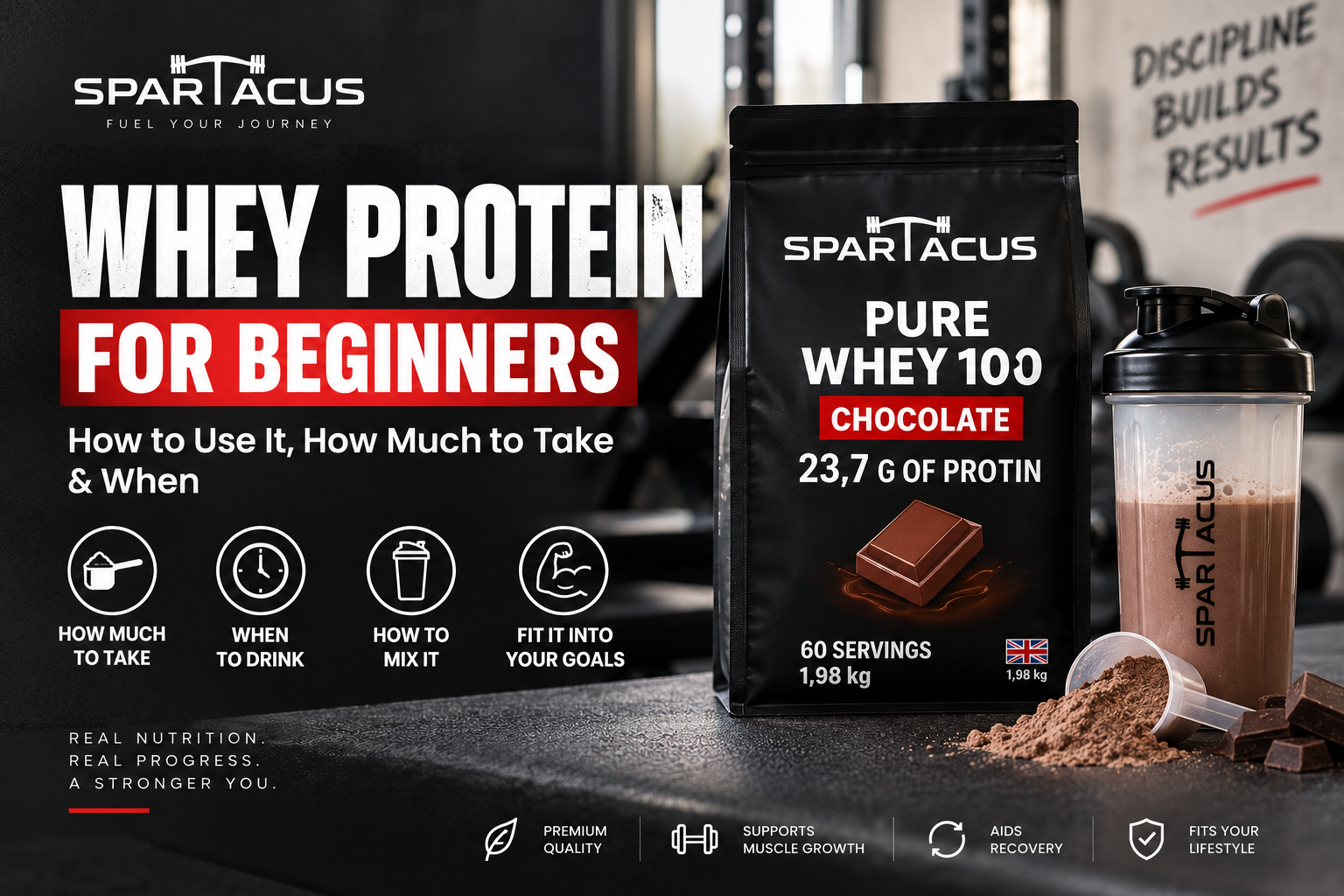
The Chocolate packaging we have used for Spartacus content displays 23.7 grams of protein, illustrating why it is better to check your specific package rather than assume all flavors provide exactly the same amount.
For beginners, the important point is to count the protein supplied by the shake toward your total daily protein intake.
Can You Drink Whey Protein Every Day?
Whey protein can be used regularly if it fits your nutritional needs and is appropriate for you.
However, drinking whey every day is not a requirement for building muscle.
On a day when your meals already provide sufficient protein, you may not need an additional shake.
On another day, a shake might make it much easier to reach your target.
That flexibility is one of the main practical benefits of protein powder.
Should You Take Whey Protein on Rest Days?
You can.
Your body does not stop recovering simply because you are not training that day.
Muscle repair and adaptation occur between training sessions, so your overall protein intake remains relevant on rest days.
You do not necessarily need a whey shake specifically. If your meals provide enough protein, food alone can meet your needs.
If a shake helps you reach your protein target conveniently, you can include it on a rest day as well.
Can You Take Whey Protein and Creatine Together?
Yes.
Whey protein and creatine serve different purposes.
Whey protein provides dietary protein and essential amino acids, while creatine supplementation helps increase muscle creatine stores.
They do not need to be separated into different shakes simply because they are different supplements.
Many people find it convenient to add creatine to a whey protein shake as part of an established daily routine.
Read our detailed guide to Creatine and Whey Protein Together: Can You Take Them at the Same Time?
You can also read Creatine Before or After Workout? if you want to understand how creatine timing fits into your routine.
Does Whey Protein Make You Gain Weight?
Whey protein itself does not automatically cause weight gain.
Changes in body weight depend substantially on your overall energy intake relative to your energy expenditure over time.
A whey shake contributes calories just like other foods and drinks.
If adding whey contributes to a sustained calorie surplus, it can form part of a diet designed to support weight gain. If it fits within your existing calorie intake, consuming whey does not automatically mean you will gain body fat.
This is why you should consider the entire diet rather than evaluating one food or supplement in isolation.
Is Whey Protein the Same as a Mass Gainer?
No.
A whey protein supplement is primarily designed to provide protein.
A mass gainer is generally formulated to provide substantially more total calories, often through a combination of protein and carbohydrates.
Someone struggling to meet protein requirements may consider whey protein, while someone deliberately trying to increase total calorie intake may have different nutritional needs.
The right choice depends on your diet and goals rather than which container looks more appropriate for the gym.
Can Whey Protein Replace a Meal?
A basic whey protein shake should not automatically be treated as a complete meal.
A balanced meal can provide protein alongside carbohydrates, fats, fiber, vitamins, minerals and other nutrients.
A protein shake can complement that diet, particularly when convenience matters, but beginners should avoid building their entire nutrition strategy around supplements.
Whole foods and a varied diet should remain the foundation.
Common Whey Protein Mistakes Beginners Make
One common mistake is assuming that more scoops automatically mean faster muscle growth.
Another is buying protein powder before understanding how much protein is already being consumed through food.
Beginners may also focus excessively on the exact minute they drink their shake while paying less attention to their overall protein intake, training program, sleep and recovery.
Other common mistakes include:
- Treating whey protein as a replacement for most meals
- Ignoring the product serving instructions
- Assuming every whey product has the same protein content
- Forgetting to count shakes toward daily calories and protein
- Expecting protein powder to compensate for inconsistent training
A better strategy is simple: train consistently, build a balanced diet, understand your daily protein needs, and use whey protein when it makes those needs easier to meet.
Frequently Asked Questions
Is whey protein safe for beginners?
For healthy adults, whey protein can be incorporated into a balanced diet as a convenient source of protein. People with allergies, medical conditions, medication considerations, or other health concerns should seek appropriate professional advice before changing their diet or supplement routine.
How much whey protein should a beginner take per day?
There is no universal number of scoops. Determine your overall daily protein needs first, estimate how much protein you obtain from food, and use whey protein when helpful to cover the remaining amount.
Is one scoop of whey protein a day enough?
It may be, depending on the protein content of the product and how much protein you already consume from food. Check the nutrition label rather than relying on scoop count alone.
Should beginners take whey protein before or after workout?
Either can fit an effective nutrition routine. Post-workout whey is convenient for many people, but your overall daily protein intake and consistent training are more important than consuming whey at one exact time.
Can I drink whey protein without working out?
Whey protein is a food-derived source of dietary protein and can contribute to your protein intake regardless of workout timing. However, drinking protein powder by itself does not replace the training stimulus required for building muscle through resistance exercise.
Can I mix whey protein with water?
Yes. Whey protein can generally be mixed with water. Follow the preparation instructions for your specific product.
Can I mix whey protein with milk?
Yes, if milk fits your dietary needs and preferences. Remember that milk adds additional protein, calories and other nutrients to the shake.
Can I take whey protein on rest days?
Yes. You can use whey protein on rest days when it helps you meet your daily protein needs.
Can I take whey protein with creatine?
Yes. Whey protein and creatine can be used within the same sports nutrition routine and can be mixed together if the product instructions and your individual needs allow.
Start With Your Daily Protein Needs
For anyone exploring whey protein for beginners, the most important lesson is that protein powder should make nutrition simpler—not more complicated.
Start by understanding how much protein you need across the entire day. Build most of your nutrition around a balanced diet, train consistently, recover properly, and then use whey protein when it provides a convenient way to reach your protein target.
Spartacus Pure Whey 100 is made with WPC 80 and is available in multiple sizes and flavors. Follow the serving and preparation information on your specific package and include the protein it provides within your overall daily nutrition plan.