

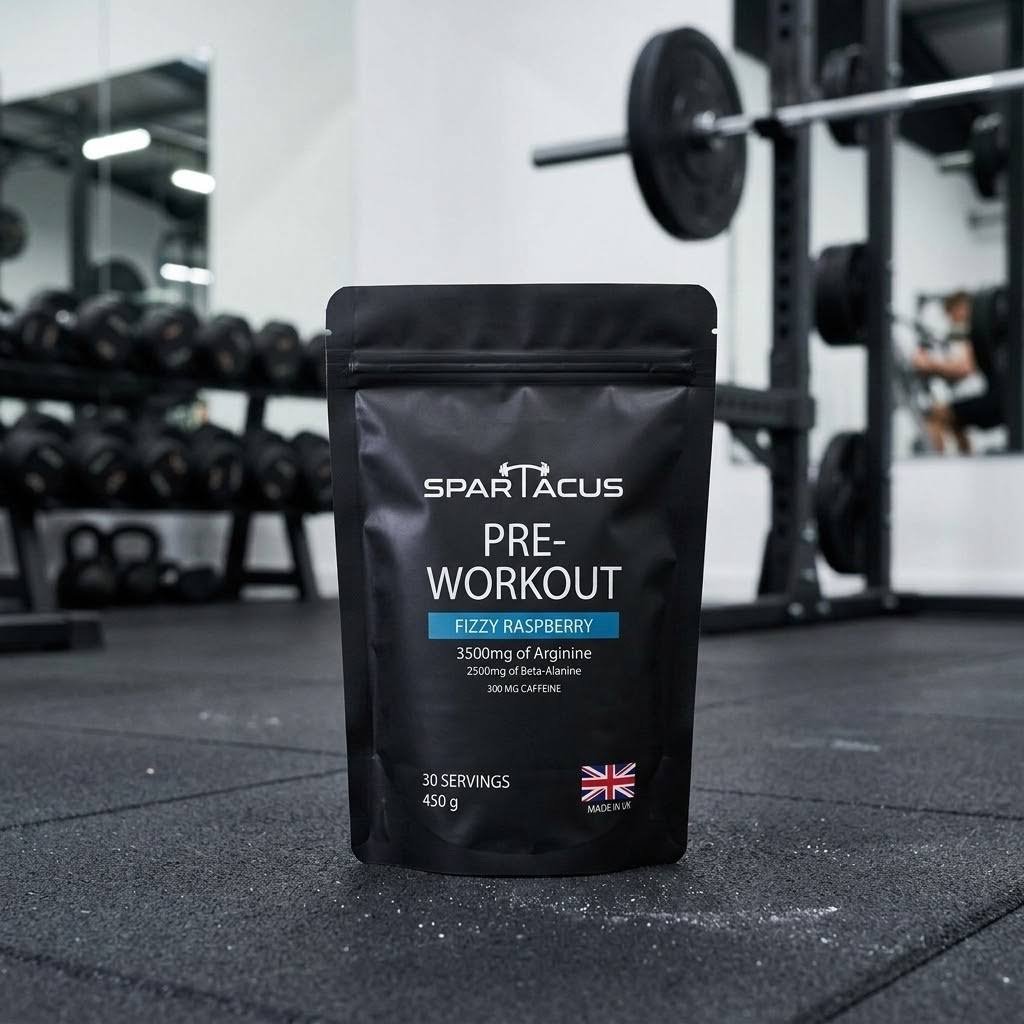
Pre-workout is a category of supplements taken before exercise, not one standardized ingredient. A caffeinated formula may improve alertness and make a session feel easier, but its effects depend on the ingredients, amounts, your caffeine intake and the exercise itself. A stronger sensation is not proof of better muscle growth.
This guide is for adults comparing pre-workout supplements in the United States. Start with the exact container’s Supplement Facts panel rather than a product name, influencer recommendation or oversized scoop.
What can you actually expect?
| Ingredient or feature | What to distinguish |
|---|---|
| Caffeine | An acute stimulant effect; count coffee, energy drinks and other supplements too. |
| Beta-alanine | Tingling can occur, while its intended training application depends on repeated use. Tingling does not measure workout quality. |
| Creatine | A separate supplement strategy that builds muscle stores over time, rather than an immediate stimulant. |
| Multi-ingredient blends | Evidence for an ingredient is not proof that every finished combination performs the same way. |
The NIH Office of Dietary Supplements review explains these distinctions and the limits of performance-supplement evidence. Pre-workout cannot replace sleep, training progression or enough food.
How much caffeine is in a serving?
Read both serving size and caffeine per serving. “One scoop” may not be one labeled serving. If the product uses a blend without disclosing an individual stimulant amount, you cannot calculate it precisely from the front of the tub.
For a simple label exercise, a pre-workout with 150 mg caffeine plus a drink labeled 80 mg totals 230 mg before any other sources. That is arithmetic, not a recommended dose. Do not estimate coffee caffeine by cup size alone.
The FDA describes 400 mg per day as an amount not generally associated with negative effects for most adults. This is not a target, a single-serving recommendation or a guarantee for you. Sensitivity, medications and health conditions matter, and some people should use considerably less or avoid stimulants.
When should you take it, and how long does it last?
Follow the exact label; there is no universal timing rule for every formula. Do not add a second serving just because you do not feel an immediate effect. Feeling less stimulated later does not mean caffeine has left your body, so an evening workout can create a sleep tradeoff.
Before buying a tub, write down your usual workout time, bedtime and total daily caffeine. If those cannot fit comfortably together, consider training without a stimulant rather than increasing the amount to overcome fatigue.
A practical US shopping checklist
- Compare the same labeled serving, not just price per container.
- Check disclosed ingredient amounts, allergens, expiry and seller identity.
- If sport certification is advertised, verify the exact product in the certifier’s directory; a logo on a marketplace image is not enough.
- Do not interpret a supplement being sold online as FDA premarket approval.
- Check current delivery and return terms separately from the product’s scientific claims.
Example: a hypothetical $30 tub with 30 labeled servings costs $1 per serving; a $24 tub with 15 costs $1.60. Neither result tells you which formula is appropriate or effective.
Who should get individual advice?
Discuss stimulant use with a clinician if you have a medical condition, take medication, are pregnant or breastfeeding, or have had palpitations or marked anxiety with caffeine. This adult guide does not establish a dose for children or teenagers. Stop using a product that causes concerning symptoms; chest pain, fainting or severe breathing problems need urgent assessment.
Is pre-workout necessary to build muscle?
No. Treat it as an optional tool after training, nutrition and recovery are in place. For the difference between daily creatine and a stimulant formula, read creatine versus pre-workout. To examine product panels in more detail, use our ingredient and serving-size guide.
Educational content from Spartacus Protein. Reviewed for source consistency on October 16, 2026; not an individual medical assessment. Product availability in the US must be confirmed separately.